

Aligning Hope’s pediatric feeding program is designed to support children with picky, restricted, or problematic eating behaviors using evidence-based behavioral strategies and compassionate caregiver coaching. Centered around the latest pediatric feeding therapy approaches, the program blends individualized assessment, hands-on therapy sessions, and structured parent education to expand children’s food preferences, reduce mealtime stress, and address underlying sensory or behavioral barriers. Families collaborate closely with the behavior team to set meaningful goals and receive personalized guidance for home routines, food exploration, and positive reinforcement strategies.

Program Features
- Consult – Start with a free consultation with a behavior analyst to discuss your child’s current eating habits and needs.
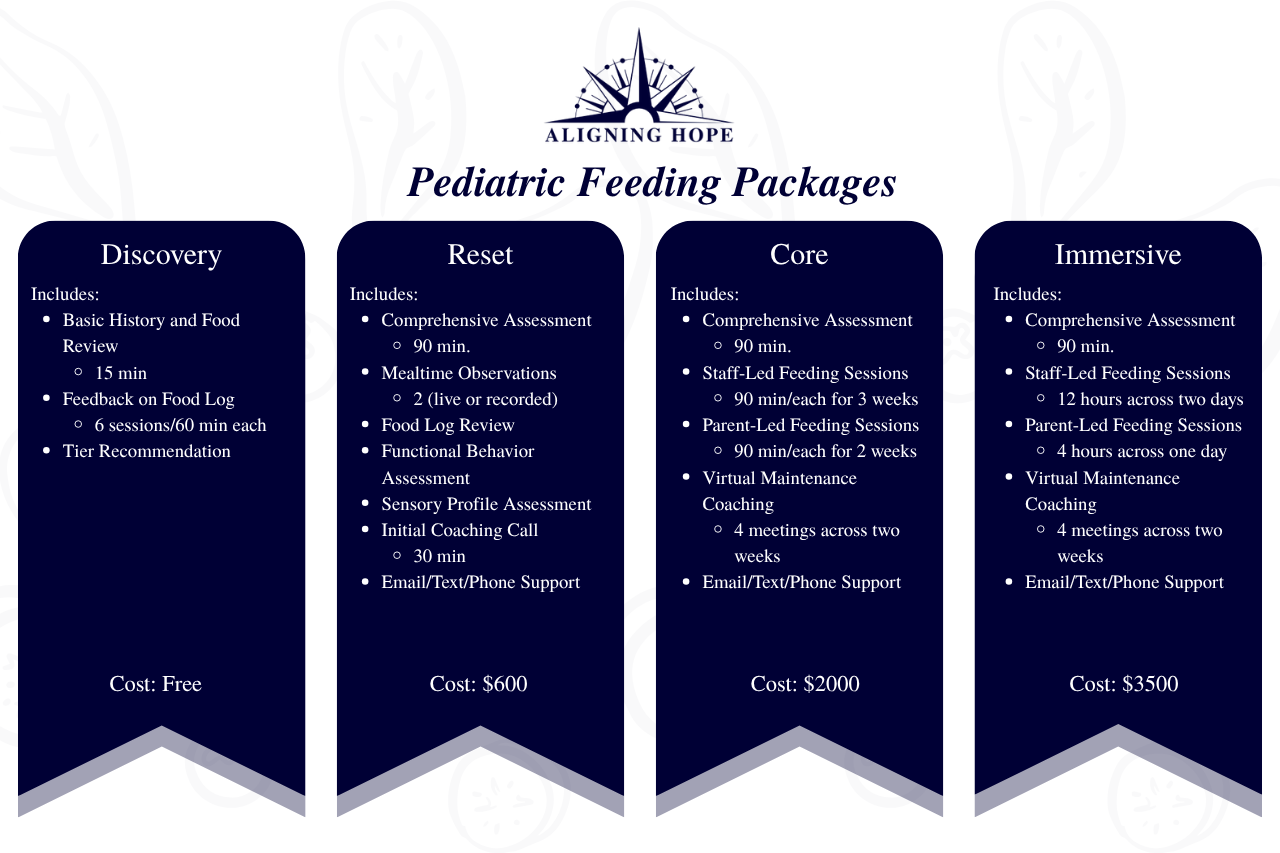
- Assessment – Participate in a structured interview process that includes an interview, direct observation of mealtime, and the completion of a food log.
- Treatment – Schedule sessions that fit your family’s unique needs and schedule. Feeding sessions with your child take place in person while parent sessions can be in person or via a secure telehealth platform. Please note that the first session for any program is a parent session. The length of treatment varies depending on your child’s needs and the overall goals.


Frequently Asked Questions
- What is behavioral feeding therapy?
- Behavioral feeding therapy helps children who struggle with eating due to sensory, behavioral, developmental, or medical reasons. It uses structured strategies and caregiver coaching to build positive mealtimes, expand food acceptance, and address feeding-related concerns.
- Who is eligible for Aligning Hope’s feeding program?
- Children with picky, restricted, or problematic eating behaviors, as a result of developmental delays or sensory challenges. Intake screening ensures the program is a good fit for each family’s goals.
- How do I enroll my child?
- Contact Aligning Hope for an initial phone consult or intake form. You’ll complete a questionnaire about your child’s history, then schedule a formal assessment with the team.
- What does the feeding evaluation involve?
- A detailed clinical interview, food history review, observation of your child eating, and collaborative goal setting.
- How are therapy goals established?
- Goals are set collaboratively with families, based on assessment, clinical data, and family priorities. Goals focus on increasing accepted foods, participation at mealtime, reducing challenging behaviors, and building caregiver skills.
- How often do sessions occur and how long does the program last?
- Most clients attend one to two times per week for 60 minutes per session. The length of the program can be individualized based on progress and needs.
- What types of therapy sessions are offered?
- Individual sessions, parent sessions, and intensive feeding treatment options are currently available.
- Who delivers my child’s therapy?
- Board Certified Behavior Analysts (BCBAs) and Registered Behavior Technicians (RBTs) conduct all sessions. Parents and caregivers also work in partnership with the therapy team and play an active role in therapy.
- Will parents/caregivers be involved during the sessions?
- Yes, parents observe meals, participate in coaching and training, and help practice skills both during and outside sessions to ensure confidence and carryover
- What is expected of families during the program?
- Families are expected to attend sessions regularly, complete home practice, fill out food and behavior logs, and communicate openly with the therapy team. Consistent home involvement is essential for success.
- How do I help my child expand their diet?
- Your therapy team will guide you in appropriate responses rooted in the science of applied behavior analysis (ABA)
- Are medical issues addressed in feeding therapy?
- If your child has complex medical or nutritional needs, our team will coordinate with outside professionals (SLP, OT, physician/pediatrician, dietitian) for collaborative care. Safety is always the highest priority.
- What precautions are in place for allergies or choking risks?
- All assessments include a review of allergies and any medical vulnerabilities. Safety protocols guide all therapy sessions.
- Is the program covered by insurance?
- Aligning Hope does not bill insurance directly for this service, but can provide detailed invoices and superbills for possible out-of-network reimbursement. Families are encouraged to verify benefit details with their insurers.
- What is the cancellation or make-up policy?
- Cancelled sessions can be rescheduled within one (1) calendar week of the original cancellation, based on staff availability.